Joy, suffering and the ego

I read today a view that the ego will always attempt to suck us back into a state of suffering. Without resistance, we begin to blur our sense of separateness and the ego needs us to see ourselves in terms of separation and difference.

From the egoic point of view, it’s vital that we remain in conflict to some extent, and that’s why, when we look at the world around us, we see so much conflict among human beings.  (Adyashanti: Falling into Grace)

This prompted for me that the realization that joy, at least as I perceive it, is rarely if ever ego driven, existing most profoundly in the moments when the barrier of ego-separation is breached by a sense of connectedness, of grace.

So for me, part of the purpose in consciously working to develop the capacity to access joy is to provide myself with one of the tools with which to combat the pull of the ego and the resultant ‘suffering’, the fall from grace into being a part of conflict.

 

A story of snow . . .

Words and storytelling give us tools to amplify wonder and joy in the everyday.

I walk across the park on my way to work through falling snow. Momentarily, I lower my eyelids and open my inner eyes. I am surrounded by myriad crystals, each unlike any other, that in moments will cease to be.

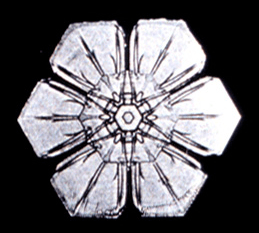
Later, amid the forced exodus of a fire alarm, I am blessed by a single, perfect flower-crystal that rests on my coat’s puffy black sleeve. I wonder, without that amplified perception that I chose to tap into earlier, would I have overlooked this gift?

Snow flakes by Wilson Bentley

Once again, I seem to have used a combination of knowledge and internal storytelling to fuel my sense of joy.

The importance of storytelling

Through listening to and reading the stories of others, we build the tools we need to frame our own experiences. Without words or narrative skill, we cannot reference or fully inhabit what happens to us and our responses to it; we cannot focus our thoughts or our emotions.

Stories give us metaphor, the stuff of the ‘creation of meaning’. They give us legends based on archetypes that enable us to recognize the rich cast of characters that inhabit our inner worlds.

Our ability to tell our own story and, further, to be aware that we choose the particular narrative that we tell ourselves and others, has a profound impact on our capacity for happiness.

The quality of our personal storytelling, as well as our capacity to listen to and truly hear the stories of others, is fundamental to our ability to connect, to build relationship.

Storytelling enables us to share our experiences and our perceptions of them and thus to show each other who we are. Our stories bind us together by connecting us to the commonality of symbol and myth and to our shared humanity.

Can knowledge amplify joy?

Walking in snow-like-sand, entranced by each grain’s iridescent glitter.  Does the knowledge of the unseen, the microscopic beauty of the crystal structures, increase my sense of wonder, of joy?

I have always perceived joy as being fed by wisdom rather than knowledge, yet I can see the possibility that humankind’s amazing curiosity and creativity open up ways of knowing, of seeing or otherwise experiencing that amplify perception even when that mode of perception is not available.

Or is this merely an intellectualization?

Brokenness and Being Human

We watched The Ides of March today and the thought that I came away with was that, until we accept the fundamental ‘brokenness’ of each and every individual, we condemn ourselves  to a downward spiral of cynicism and disillusion and to the machinations of the most damaged and controlling among us.

In every child’s growth to adulthood, at some point they have to face the reality that their parents are less than perfect, often contradictory and that they do not have all the answers. Hopefully, most children move beyond this into a changed but still loving relationship. Why, then, do we seem increasingly to expect our authority figures, our leaders, to be any less flawed than the rest of us?

Only through the acceptance of brokenness can we embrace and honour the best of what it is to be human. Integrity and the power for good are not cancelled out by imperfection. By holding those in high office to impossible standards, we allow their humanity to be used against them; either we reject them for their ‘weakness’ or their integrity is compromised in the attempt not to expose that ‘weakness’ and they are left open to manipulation.

Thus our unrealistic requirement for ‘perfection’ becomes the basis of ‘corruption’ and there is no longer room in the world for ‘great’ human beings.